
Understand your symptoms
Fibroids may cause heavy or prolonged bleeding, pelvic pressure and frequent urination. These symptoms can have other causes, so an evaluation is important before choosing treatment.

Part of NYMD Center
Heavy periods, pelvic pressure or a new fibroid diagnosis? Our gynecology and interventional radiology team in Manhattan and Queens helps you compare UFE and other options around your symptoms, imaging and pregnancy plans.
Request a consultation Call (212) 991-9991Find your next step
Explore fibroids and related conditions, understand treatment alternatives, and prepare questions about your symptoms and reproductive goals. The evaluation should explain how the findings relate to your choices.
These reviews describe experiences across the broader practice and named clinicians. They are not fibroid-specific treatment outcomes or a guarantee of results.
Highly recommend, the doctor was very knowledgeable and helpful, she listened to my concerns and answered every question.
Sarah is fantastic. Truly listens to my concerns. I feel so heard every time I see her.
I always have the best experience coming here. I feel well taken care of and I’ll always keep coming back!
Fantastic office, super clear communication, very friendly and helpful staff!
Heavy periods, pelvic pressure or a new fibroid diagnosis can leave you with several decisions. Start with the question that matters most to you.
Gynecologists Tamara Guichard, MD, and Deirdre Gundy, MD, assess symptoms and gynecologic treatment options. Interventional radiologist Yosef Golowa, MD, evaluates suitability for image-guided procedures such as UFE. Confirm your clinician, consultation location and procedure arrangements with the office; a listing does not mean every service is available at every location.

Gynecology
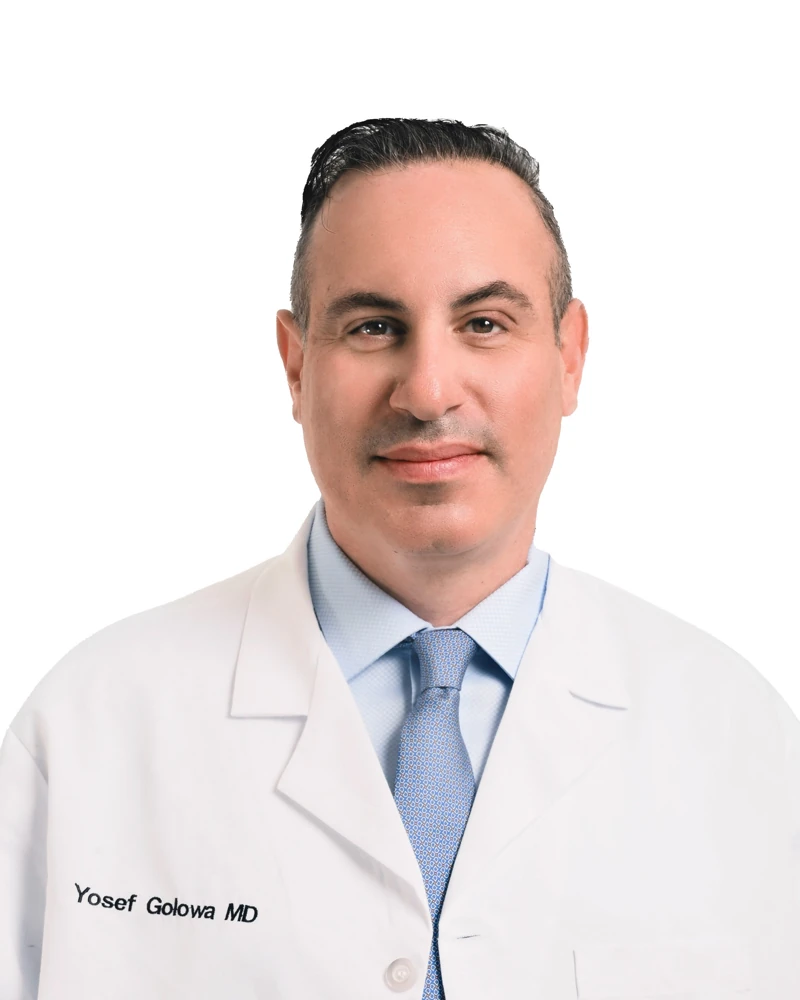
Interventional radiology

Gynecology
Your clinicians assess symptoms, the size and location of fibroids, medical history and pregnancy plans. UFE preserves the uterus but is not suitable for everyone and does not guarantee a future pregnancy.
Yes. Ask about observation, medicines and surgical options as well as UFE. The choice should reflect your symptoms and goals; a consultation does not commit you to a procedure.


Uterine fibroid embolization (UFE) shrinks fibroids by blocking their blood supply. It does not surgically cut out fibroids or remove the uterus. A thin catheter enters through a small skin puncture or nick at the wrist or groin; abdominal incisions and stitches are usually not needed.
| Treatment | What happens | Access and incisions |
|---|---|---|
| UFE | Fibroids shrink; the uterus stays in place. | Small skin puncture or nick for a catheter at the wrist or groin. |
| Myomectomy | A surgeon removes fibroids while keeping the uterus. | Open, laparoscopic or robotic surgery uses abdominal incisions. Hysteroscopic myomectomy goes through the cervix and does not require abdominal incisions. |
| Hysterectomy | A surgeon removes the uterus. | The route may be abdominal, laparoscopic, robotic or vaginal; incision patterns vary. |
The best option depends on your symptoms, fibroid size and location, medical history and pregnancy plans. UFE has risks and may not be suitable for everyone; discuss benefits, recovery, fertility considerations and alternatives with your care team.
Discuss whether UFE is right for youUse the secure online request or call the office for scheduling. Your appointment is not confirmed until the office contacts you. This is a scheduling request, not medical intake or a payment service. Call for medical questions or payment assistance. For a medical emergency, call 911.
Start with the existing consultation and symptom-record guides, then explore the full fibroid article library.
Organize your questions and available reports.
Keep a record to discuss with your clinician.
Browse the existing library by topic.